ASTM F1554 Anchor Bolts: Grade 36, 55, 105 Selection Guide for Structural Anchoring
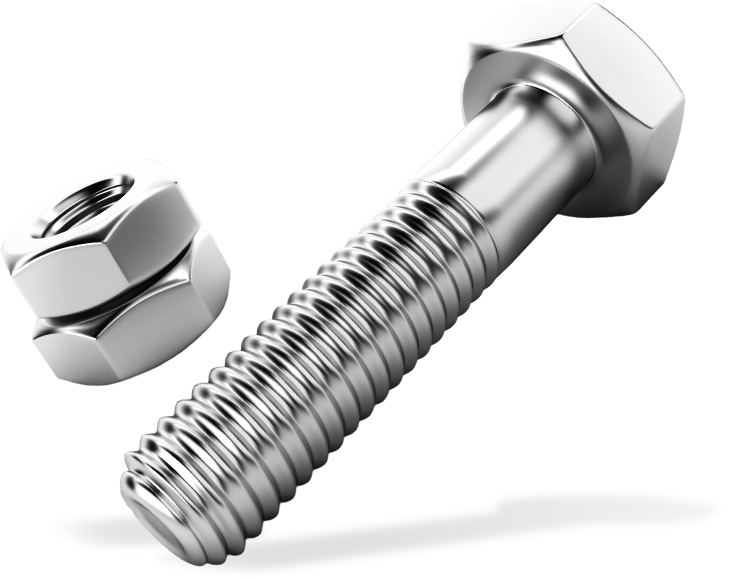
When a structural engineer specifies anchor bolts for a steel column base plate on a reinforced concrete foundation, the governing specification is usually ASTM F1554. This standard covers straight and bent, headed and headless steel anchor bolts intended to anchor structural supports to concrete. F1554 defines three strength grades: Grade 36, Grade 55, and Grade 105. The practical difference between these grades affects both the safety margin and the installed cost. The most important procurement decision is selecting the grade before the order is placed. A Grade 36 anchor bolt with a 36 ksi yield strength may be sufficient for a lightly loaded equipment anchor, while a Grade 105 anchor with a 105 ksi yield strength is required for heavy tension connections in tall steel frames. Rework after concrete placement is expensive, so the grade selection must be correct on the first pass. Core conclusion: Select Grade 36 for lightly loaded anchors where weldability and ductility matter. Use Grade 55 for standard structural anchoring tasks. Specify Grade 105 only where tension loads are high and the connection has adequate ductility. Verify the grade marking and the mill certificate before shipment. ASTM F1554 Carbon Steel Hot-Dip Galvanized Anchor Bolt This anchor bolt meets ASTM F1554 specifications for structural anchoring. Available in grades 36, 55, and 105, it suits various load requirements, with hot-dip galvanizing for corrosion resistance in concrete embedment applications. View Product → What ASTM F1554 Covers: Grading and Mechanical Requirements ASTM F1554 defines the chemical, mechanical, and dimensional requirements for anchor bolts. The specification applies to straight and bent configurations, and both headed and headless anchor bolts. It also covers the accompanying nuts and washers that are compatible with each grade. The grade classification in F1554 is based on the minimum yield strength. The standard also specifies tensile strength, elongation, and reduction of area values for each grade. These properties determine how the anchor bolt behaves under load, including how much deformation it can absorb before failure. Grade 36 Minimum yield: 36 ksi (248 MPa) Material: Low carbon steel (A36 or equivalent) Typical use: Lightly loaded anchors, equipment base plates, temporary structures Advantage: Excellent weldability and high ductility with 23% minimum elongation Grade 55 Minimum yield: 55 ksi (379 MPa) Material: Medium carbon or alloy steel Typical use: General structural anchoring, column base plates, industrial framing Advantage: Best balance of strength and formability with 21% minimum elongation Grade 105 Minimum yield: 105 ksi (724 MPa) Material: Alloy steel (AISI 4140 or 4142), quenched and tempered Typical use: High-tension connections, seismic retrofit, large-scale structures Advantage: Highest strength-to-weight ratio with 15% minimum elongation F1554 Grade Comparison: Mechanical Property Table The table below compares the key mechanical properties of the three F1554 grades. The values are specified in ASTM F1554 and are mandatory for compliance. Property Grade 36 Grade 55 Grade 105 Yield strength min (ksi) 36 55 105 Tensile strength (ksi) 58-80 75-95 125-150 Elongation in 2 in. min (%) 23 21 15 Reduction of area min (%) 40 35 30 Grade 105 has the highest strength but the lowest elongation. In seismic design, ductility is as important as strength. The supplementary requirement S1 (Charpy impact testing) can be specified when toughness under dynamic loading is critical. Load Capacity and Ductility Profiles At the same nominal diameter, the axial load capacity of F1554 anchor bolts changes dramatically with grade. The chart below shows the approximate allowable axial load for a 1 in. diameter anchor bolt, calculated using the minimum yield strength and a conservative safety factor of 0.60 for steel design. Grade 36 ~28 kips Grade 55 ~43 kips Grade 105 ~82 kips The elastic capacity varies by 2.9 times between Grade 36 and Grade 105 at the same diameter. However, ductility drops from 23% elongation in Grade 36 to 15% in Grade 105. For applications in seismic zones or where anchor bolts are expected to yield, the higher-grade anchor must be paired with a design that accommodates its lower ductility. The bolt's embedment depth and edge distance also influence the actual failure mode. Industry Application Distribution of F1554 Anchor Bolts ASTM F1554 anchor bolts are used across multiple construction sectors. The distribution below shows where the specification is most commonly applied in structural engineering practice. 35% Building and industrial steel construction 25% Bridge and highway structures 15% Stadium and large-span roof structures 15% Equipment and machinery anchorages 10% Concrete foundation repair and retrofit The industrial segment is the largest single user because F1554 anchor bolts are specified for column base plates, equipment foundations, and pipe rack supports in process plants. Bridge applications follow closely, where high-tension Grade 105 anchors are used for bearing connections and seismic restraint systems. Selection Guide: How to Choose the Right F1554 Grade Selecting the correct grade is a step-by-step process that starts with the design load and ends with the surface treatment specification. The following steps are recommended for procurement teams and structural engineers. 1 Define the design load Calculate the factored tensile, shear, and moment loads from the structural analysis. The design load determines the required cross-sectional area and grade. 2 Evaluate embedment conditions Check the concrete embedding depth, edge distance, and anchor spacing. These factors determine the pullout or breakout capacity of the anchor bolt. 3 Match the grade to the load Compare the applied load with the allowable capacity. Use Grade 36 for lighter duty, Grade 55 for most structural work, and Grade 105 for heavy tension or seismic conditions. 4 Select the surface treatment For exterior exposure, hot-dip galvanizing per ASTM A153 is preferred. For indoor or controlled environments, zinc plating or black oxide may be adequate. 5 Verify the marking and documentation Confirm that the grade designation is stamped on the anchor bolt and request the mill test certificate to verify chemical and mechanical properties. 6 Confirm the installation procedure Review the installation method, including embedment depth, nut torque, and the use of proper washers to prevent bearing failure on concrete. Maintenance, Corrosion Protection, and Compliance The long-term performance of ASTM F1554 anchor bolts depends on proper corrosion protection and correct installation. Procurement teams should understand the compliance requirements to avoid premature failure and quality disputes. Corrosion protection: Hot-dip galvanizing per ASTM A153 provides a thick zinc coating for exterior and marine environments. Electrolytic zinc plating offers a thinner coating for indoor applications. Black oxide is suitable for light-duty or temporary uses but does not offer meaningful corrosion resistance. Inspection: Verify the grade marking on each bolt and confirm the mill certificate matches the specified grade. Tests for yield strength, tensile strength, and elongation are mandatory per ASTM F1554. Installation: Use the correct embedment depth from the design drawings. Ensure full thread engagement with a heavy hex nut. Do not over-torque, which can cause thread stripping or concrete breakout. Supplementary requirements: Material additions like S1 (Charpy impact testing for Grade 55 and Grade 105) may be needed for seismic or dynamic load applications. Discuss these requirements with the supplier before ordering. For projects requiring governed quality assurance, reference the installation and testing requirements for high-strength bolts to align the anchor bolt specification with the overall structural fastening strategy. .article-section h2{font-size:22px;font-weight:bold;text-align:left;margin-bottom:12px!important;}.article-section h3{font-size:16px;font-weight:bold;text-align:left;margin-bottom:12px;}.article-section p{font-size:16px!important;margin-bottom:12px;}.article-section ul{margin-bottom:12px;list-style-type:disc;list-style-position:inside;}.article-section ol{margin-bottom:12px;list-style-type:decimal;list-style-position:inside;padding-left:0;}.article-section li{list-style:inherit;font-size:16px;margin-bottom:6px;}.article-section table{display:table!important;}.article-section thead{display:table-header-group!important;}.article-section tbody{display:table-row-group!important;}.article-section tr{display:table-row!important;}.article-section th{display:table-cell!important;font-weight:bold;border:1px solid #cccccc;padding:8px;}.article-section td{display:table-cell!important;border:1px solid #cccccc;padding:8px;}.article-section table caption{caption-side:bottom;font-size:16px;margin-bottom:12px;font-style:italic;color:#808080;} .product-card{display:block;margin:20px 0;border:1px solid #e5e7eb;border-radius:10px;overflow:hidden;font-style:normal;background:#fff}.pc-inner{display:flex;text-decoration:none;color:inherit;align-items:center;min-height:120px}.pc-img{width:160px;min-width:160px;aspect-ratio:4/3;height:auto;min-height:120px;object-fit:cover;flex-shrink:0;display:block;align-self:stretch}.pc-body{padding:12px 16px;flex:1;min-width:0;display:flex;flex-direction:column;align-self:stretch;justify-content:center}.pc-title{display:block;font-size:15px;font-weight:600;color:#111;margin:0 0 6px;line-height:1.4}.pc-desc{display:-webkit-box;font-size:13px;color:#6b7280;margin:0 0 8px;line-height:1.5;overflow:hidden;-webkit-line-clamp:2;line-clamp:2;-webkit-box-orient:vertical}.pc-cta{display:block;font-size:13px;font-weight:600;color:inherit;margin-top:auto}.pc-inner:hover .pc-title{text-decoration:underline} .article-section a:not(.pc-inner),article a:not(.pc-inner){color:inherit}.pc-cta{color:inherit!important}
26-09-01
اقرأ المزيد
شرح لوحات المحامل: الأنواع والمواد والأحجام واختيار أدوات التثبيت
ما تفعله لوحة تحمل في الواقع لوحة التحمل عبارة عن لوحة فولاذية موضوعة بين حمولة مركزة ودعامة أكثر ليونة. في قاعدة العمود، ينتشر تفاعل العمود عبر اللوحة إلى قاعدة خرسانية؛ في مقعد العارضة، تأخذ اللوحة التفاعل النهائي وتوزعه على مساحة أكبر من البناء أو الخرسانة. والنتيجة العملية هي انخفاض ضغط المحمل، ومسار تحميل مسطح، واتصال لا يسحق الدعم. يعد الفحص الهيكلي الأساسي أمرًا مباشرًا ومباشرًا: يجب أن يظل ضغط المحمل على منطقة اللوحة أقل من ضغط المحمل المسموح به للدعم. إذا كانت اللوحة صغيرة الحجم، يمكن للخرسانة أن تتكسر وتتشقق؛ إذا كانت رقيقة جدًا، تنثني اللوحة ويتركز الحمل عند النقطة الأكثر صلابة. ولهذا السبب ينظر المهندسون إلى حجم وسمك لوحة المحمل كجزء من نفس تصميم التوصيل. الجدول 1. الاستخدامات النموذجية للألواح الحاملة في الوصلات الفولاذية الإنشائية. التطبيق مسار التحميل التثبيت النموذجي لوحات قاعدة العمود الحمل المحوري للعمود على القاعدة الخرسانية مسامير التثبيت، والصواميل السداسية الثقيلة، والغسالات لوحات تحمل شعاع رد فعل نهاية الشعاع على البناء أو الخرسانة مسامير التثبيت، والقضبان الملولبة، والحشوات لوحات تحمل الجسر رد فعل العارضة من خلال تحمل الرصيف مسامير عالية القوة، ومسامير التثبيت، والأزرار المعدات ولوحات الركيزة تحميل الآلة إلى الأساس صواميل التسوية، ومسامير التثبيت، وصواميل القفل الأنواع الشائعة من لوحات تحمل تظهر لوحات المحامل في العديد من الوصلات، ولكن الهدف من التصميم هو نفسه: إنشاء سطح محمل ثابت ونقل الحمل دون الضغط الزائد على المواد الداعمة. لوحات قاعدة العمود لوحات قاعدة العمود are the most familiar type of bearing plate. They transfer axial load, and sometimes bending, from a steel column into a concrete footing or pedestal. The plate is typically welded to the column and held down with anchor bolts, shims, and leveling nuts. Edge distance and bolt pattern need to align with concrete cover and embedment requirements so the anchorage remains effective. لوحات تحمل الشعاع والبناء تُستخدم الألواح الحاملة للحزم عندما ترتكز الحزمة الهيكلية على جدار حجري أو جدار خرساني أو حامل فولاذي. يجب أن تكون اللوحة طويلة بما يكفي وواسعة بما يكفي لمنع البناء أو الخرسانة من التكسير عند نهاية العارضة. تستخدم بعض التفاصيل الإقليمية مصطلح لوحة البناء لنفس المكون؛ يكمن الاختلاف بشكل أساسي في افتراض التحميل وليس الشكل. محمل الجسر والألواح الوحيدة تستخدم تطبيقات الجسور لوحات تحمل أثقل لأن التفاعلات النهائية تكون عالية ويحدث بعض الدوران عند المحمل. تعمل الألواح الوحيدة الموجودة أسفل العارضة، وألواح البناء فوق الرصيف، وألواح المحمل الوسيطة معًا لنشر الحمل واستيعاب الحركة. عادةً ما يتم شد البراغي مسبقًا بحيث لا يتحكم الانزلاق في الاتصال. بالنسبة لوصلات الألواح المثبتة ميدانيًا حيث يصعب فحص عزم الدوران، ASTM F1852 A325 مسامير ملتوية عالية القوة هي طريقة عملية لتأكيد التظاهر من النهاية المحزوزة. ASTM F1852 A325 الموردين الصلب الكربوني السداسي الثقيل الملتوي، المصنع - Soverchannel - الصين ASTM F1852 A325 الثقيلة عرافة تويست بولت عادي الكربون الصلب الموردين والبيع بالجملة ASTM F1852 A325 الثقيلة عرافة تويست... عرض المنتج → المواد والطلاء والتحجيم درجات الصلب وحماية السطح يتم قطع معظم ألواح التحمل من لوحة ASTM A36 لأنها قابلة للحام واقتصادية. يتم اختيار A572 Grade 50 حيث تسمح القوة الأعلى بلوحة أرق، بينما يناسب الفولاذ المقاوم للصدأ مثل A588 الجسور والهياكل الخارجية. الجلفنة هي الحماية الأكثر شيوعًا للألواح المكشوفة. يجب تحديد نفس الطلاء لمسامير التثبيت والصواميل بحيث يكون سمك الطلاء والأداء الجلفاني متسقًا. ASTM A36 للمباني العامة ومقاعد العارضة البسيطة. A572 Grade 50 للتفاعلات الثقيلة وتقليل سماكة اللوحة. A588 للجسر المقاوم للطقس والتفاصيل الخارجية. الفولاذ المقاوم للصدأ 304 أو 316 للبيئات البحرية والكيميائية وتجهيز الأغذية. كيفية التحقق من الحجم والسمك يبدأ التصميم العقلاني بمساحة التحمل المطلوبة: قم بتقسيم التفاعل المعامل على إجهاد التحمل المسموح به على الخرسانة أو البناء. ثم حدد المسافة غير المدعومة على اللوحة، وعادة ما تكون المسافة من وجه العمود أو شفة العارضة إلى حافة اللوحة، وتحقق من ثني اللوحة. التفاصيل العملية مهمة تمامًا مثل الرياضيات: يجب أن تكون اللوحة مسطحة ضمن تفاوتات معقولة، ويجب أن يكون مستوى الجص مستمرًا، ويجب أن يتم ثقب أو حفر فتحات مسامير التثبيت لقطر المسمار الفعلي، وليس كبيرًا بما يتجاوز حد الكود المطبق. السحابات التي تجعل لوحة تحمل تعمل إن لوحة المحمل مفيدة فقط مثل مرساها. تقاوم مسامير التثبيت أحمال الرفع والقص والتركيب؛ تنشر الصواميل السداسية الثقيلة والغسالات قوة التثبيت على مساحة أكبر؛ تتعامل البراغي عالية القوة مع عمليات فحص القص والانزلاق حيث يتم ربط الألواح أو توصيلها بالأعضاء المجاورة. بالنسبة للمثبتات المصبوبة في المكان، ASTM F1554 مسامير التثبيت المجلفنة هي نقطة انطلاق ثابتة. وهي متوفرة في الدرجة 36 والدرجة 55 وتوفر الليونة المطلوبة لقضبان التثبيت المنحنية، بالإضافة إلى قابلية اللحام اللازمة عند لحام اللوحة بالمرساة بدلاً من تثبيتها فقط. ASTM F1554 الكربون الصلب تراجع الساخنة المجلفن مرساة الترباس الموردين، مصنع - شان Soverchannel - الصين ASTM F1554 الكربون الصلب المجلفن بالغمس الساخن مرساة الترباس الموردين والبيع بالجملة ASTM F1554 الكربون الصلب المجلفن بالغمس الساخن ... عرض المنتج → بمجرد إصلاح تخطيط المرساة، لا تعتمد على أجهزة صغيرة الحجم أو غير متطابقة. يحتاج قضيب التثبيت المجلفن إلى صامولة سداسية ثقيلة مع مشاركة كافية للخيط، ويحتاج المسمار الهيكلي عالي القوة إلى غسالات مسطحة أسفل العنصر المدور. قبل إرسال البراغي عالية القوة إلى الموقع، تحقق من متطلبات AISC أو ASTM المعمول بها. مراجعة مركزة ل متطلبات تركيب واختبار الترباس عالية القوة يساعد على منع أخطاء التحميل المسبق والفحص في توصيلات لوحة المحمل. مصادر لوحات تحمل وحزم السحابة الخاصة بهم عادةً ما ينقسم شراء لوحة المحمل إلى تيارين من الإمداد: يقوم صانع الفولاذ بتزويد اللوحة، ويقوم مورد أدوات التثبيت بتزويد المراسي والصواميل والغسالات وأحيانًا البراغي الميدانية. يخلق هذا الانقسام مشكلة شائعة: تصل فتحات الصفائح والمسامير من مصادر مختلفة بسماكة أو تفاوتات مختلفة للطلاء. إحدى الطرق العملية لتقليل هذه المخاطر هي شراء حزمة التثبيت الكاملة من مصنع واحد يمكنه مطابقة المواد وعلامات التصنيف والطلاء والوثائق. اطلب قضبان التثبيت والصواميل بنفس مواصفات الطلاء بحيث تظل تفاوتات الخيط قابلة للتنبؤ بها. بالنسبة للقضبان الملولبة الثقيلة ومجموعات المسامير، قم بتضمين صواميل سداسية ثقيلة مطابقة مثل ASTM A194 B7 صواميل سداسية ثقيلة ASTM A194 B7 موردون المكسرات السداسية الثقيلة السوداء، المصنع - Shanghai Soverchannel Ind Soverchannel - الصين ASTM A194 B7 الموردين المكسرات السداسية السوداء الثقيلة والجملة ASTM A194 B7 مصنع المكسرات السداسية السوداء الثقيلة، ASTM A194 B7 ... عرض المنتج → للحصول على منطقة تحمل أوسع ومشاركة خيط أكثر موثوقية. اطلب شهادات المواد وتقارير سمك الطلاء قبل بدء الصب أو التجميع. بالنسبة لأنماط التثبيت غير القياسية، أو الألواح كبيرة الحجم، أو المواد غير العادية، أو التغليف الخاص، فإن الدعم المباشر من الشركة المصنعة مهم. يمكن لصانع أدوات التثبيت ذو الإنتاج المرن تطوير قضبان تثبيت مخصصة، ومطابقة الصواميل السداسية الثقيلة، والطلاءات المعتمدة دون تغيير هندسة الخيوط أو الضغط الزائد على المادة. بالنسبة للمهل الزمنية والوثائق الخاصة بالمشروع، اتصل بمورد أدوات التثبيت قبل صب قضبان التثبيت . يتم تجنب العديد من المشكلات الهيكلية عند مراجعة تفاصيل اللوحة وحزمة التثبيت معًا، وهذا هو المكان أيضًا قفل مخصص وخدمات تصنيع OEM/ODM تصبح ذات قيمة. .article-section table{display: table!important;}.article-section thead{display: table-header-group!important;}.article-section tbody{display: table-row-group!important;}.article-section tr{display: table-row!important;}.article-section th{display: table-cell!important;}.article-section td{display: table-cell!important;}.article-section caption{caption-side:bottom;font-size:16px;margin-bottom:12px;font-style:italic;color:#808080;}.article-section th{font-weight:bold;border:1px solid #cccccc;padding:8px;}.article-section td{border:1px solid #cccccc;padding:8px;}.article-section ol{margin-bottom:12px;list-style-type:decimal;list-style-position:inside;padding-left:0;}.article-section ul{margin-bottom:12px;list-style-type:disc;list-style-position:inside;}.article-section li{list-style:inherit;font-size:16px;margin-bottom:6px;}.article-section h2{font-size:22px;font-weight:bold;text-align:left;margin-bottom:12px!important;}.article-section h3{font-size:16px;font-weight:bold;text-align:left;margin-bottom:12px;}.article-section p{font-size:16px!important;margin-bottom:12px;} .product-card{display:block;margin:20px 0;border:1px solid #e5e7eb;border-radius:10px;overflow:hidden;font-style:normal;background:#fff}.pc-inner{display:flex;text-decoration:none;color:inherit;align-items:center;min-height:120px}.pc-img{width:160px;min-width:160px;height:auto;min-height:120px;object-fit:cover;flex-shrink:0;display:block;align-self:stretch}.pc-body{padding:12px 16px;flex:1;min-width:0;display:flex;flex-direction:column;align-self:stretch;justify-content:center}.pc-title{display:block;font-size:15px;font-weight:600;color:#111;margin:0 0 6px;line-height:1.4}.pc-desc{display:-webkit-box;font-size:13px;color:#6b7280;margin:0 0 8px;line-height:1.5;overflow:hidden;-webkit-line-clamp:2;line-clamp:2;-webkit-box-orient:vertical}.pc-cta{display:block;font-size:13px;font-weight:600;color:inherit;margin-top:auto}.pc-inner:hover .pc-title{text-decoration:underline} .article-section a:not(.pc-inner),article a:not(.pc-inner){color:inherit}.pc-cta{color:inherit!important}
26-08-11
اقرأ المزيد